
Gender Politics
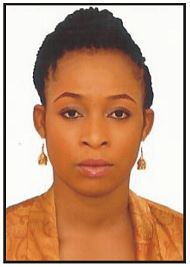
Mrs Winifred Adzande
winifredadzande@gmail.com
The issue of gender question in world politics has continued to dominate discourses, yet inequality keeps magnifying into diverse forms. All attempts, even in the developed climes, have failed to place the male and female gender on the same level. This is partly because of what traditions, especially in Africa reconciles. In all spheres, the discrimination is there. Although there are exceptions of a few women who have made it pass the glass ceiling. Let us establish from the start that pockets of women world over have made it in their chosen endavours, but the number is too insignificant to be place on the table.
Theoretically speaking, this discourse is rooted in five variables in appreciation of the gender issue as its affects females. Some critics prefer to call them the weaker sex (whatever that means). These variables are: literary equation, cultural equation, political equation, religious equation and social equation. The configuration is central to every other stereotype attached to the female character in every divide.

Females like men have begun writing as long as history; though the early ones were not allowed to go public with their write-ups. In fact, some females (as revealed), had to hide under pseudonyms to get their books published; to get their voices heard. This is a crime bothering on fundamental human rights of all humans and a degradation of women. Somehow, that phase has passed, but it had to be so because the press was controlled by men who would rather not allow a “common” woman to excel alongside (or better than) men.
In Africa, it was about the 19th century that females started having their way to the print. Yet, contents of female pioneers like Ama Ata Aidoo and Efua Sutherland were guided to conform to what could not be seen as standing up to or against males.
Cultures of Africa fail to treat the women as equals. Instead, they are seen as “less human.” This notion has spread to the economic and political lives of women thereby limiting their capacity to “occupy and control” even their immediate families as it were. The situation has improved literary in the west (Europe and the Americas). In Africa and Asia, it is becoming increasingly difficult for the women to have their say as enshrined in the Fundamental Human Rights. Africa is one place where patriarchy is extolled as noted in the introductory lines. It is always the men on one divide, then women and children on the other divide. A highly educated woman in Africa is equated with the child culture-wise.
In politics, the 35% affirmative action for women is an illusion. The women have never come close to that. It seems a bad situation is becoming worse with women having less representation in government and by extension politics. The reason is not that the women who had positions in the past failed. It is chiefly because it is a man’s world. I had course to discuss with a female politician who told me jokingly that “not many women can make it in politics because meetings at which tough decisions are decided take place at nights (night here not literal). How many women will leave family and go for such meetings?” It is synonymous of a jungle where only the strong survive and the weak become grasses trampled on.


